|
My next event is The Illustrators' Fair at Granary Square, King's Cross London N1C. Saturday 12 July 11am -5pm.
One of my all-time favourites, this is packed with 100+ illustrators and small press publishers. It is all under cover in the Granary Square building, and dogs are welcome! I will have new tees, cards prints and all sorts! Have a look @illustratorsfair instagram feed to see who else will be there. I went to art college in the Eighties - it was amazing, I loved it! I felt like I fit in, after being the odd one out at home and at school, and having at least one teacher shake his head at me patronisingly when I said I wanted to go to Art College.
I studied in various colleges, at O Level, A level, foundation, degree, masters. I learned a lot, various skills and processes and sometimes just little nuggets of information, sometimes tiny things that made a big difference. Some of those skills and processes might seem outdated now - this was pre computer days, can you imagine? But the skills stayed with me. I studied textile design at Trent. I learned how to put a design into repeat (without Photoshop! ) how to wind a warp, and thread a loom (oh my god it takes ages) I learned how not to kill myself using an industrial sewing machine - they were slowed-down ones but still...The little knee pedal for swinging the needle for free embroidery required a bit of dexterity (if you can have dexterity with knees....) And knitting machines...hmmm, just not for me. Then screen printing - this was before digital printing, before you could reproduce anything as many colours as you want. In those days we spent a long time painting and drawing, using various methods/techniques, (bliss!) Then came developing the artwork into a design and working out a repeat. Then you had to find ways to reproduce the textures of the original paintings onto Kodatrace - like very thick tracing paper. I remember a lot of use of masking fluid, and wax resist - reproducing watercolour effects was unheard of - it's a cinch today, with digital printing.Then you put the Kodatrace on to a screen with light sensitive emulsion on it, and develop it. And then you had to pin fabric, mix dyes, print, unpin fabric, steam it to fix the print. All these technical skills took a long time to master, and I probably couldn't do some of them now, but some of the things I learned still inform what I do these days. I'm not a textile printer, but I still design textiles or repeat patterns anyway. I make illustrations using the painting and drawing skills I developed over the years in all those different places - Perspective? Thanks Loughborough College of Art, you nailed it! I can still draw something that looks 'right', I know the principles, and I can choose to ignore them if I want. I thought I'd write down the things that have stayed with me, and ask you to share yours with me. Of course not everyone goes to art college, and it isn't always a teacher that says something that works for you. Some of the best comments have been from art directors, or other people looking at my work- some didn't even realise they were teaching me something, they were just observations. So in no particular order -and I reserve the right to come back and edit/rearrange this: 1. Do not use grey as a mount for coloured artwork- any ex art students remember Crits? (Critiques) terrifying sometimes, especially in the early days...you do some work, pin it to the wall and then the whole class gather round while the tutors discuss it. Anyway one of my very first crits I had carefully mounted my fabric samples on a very delicate grey mount board (I even remember the name of the colour - dove grey) and the first thing the tutor said was Never Use Grey, it drains the colour from everything...and I never have since. And I hate grey now (apart from Payne's Grey watercolour which I love but that is really blue.... 2. Do not simply reproduce the design that you see in your mind, be open to seeing what happens in the process It can be frustrating when the image in my head doesn't appear on the paper, as if by magic - but sometimes, hopefully often, something else happens, that I hadn't expected, or even thought about. I think this is why I love the unpredictability of using real paint techniques, the paint acts differently every time, you can't control it too much, even a change in the weather has an effect. 3.Don't clean things up too much. This one actually was an art director, who was looking at my portfolio and said "Oh, you leave the mistakes in...." insert laughing crying emoji here! Well I hadn't realised that I did, but when I looked at it later, I realised that that actually did give it a bit of an edge - you can go over an artwork too much and clean it up but it becomes a bit lifeless, and the odd bit of 'reality' doesn't do it any harm. I like to use real paint and art materials, so sometimes there might be a bit of a smudge or a pencil line showing through a colour. Sometimes a colour might bleed into another, and I like that. What's your favourite artwork tip? Read more on my gouache tips here Please join Ketchup! for news of the latest product drops in my shop, occasional discounts work in progress, and special exclusive offers.
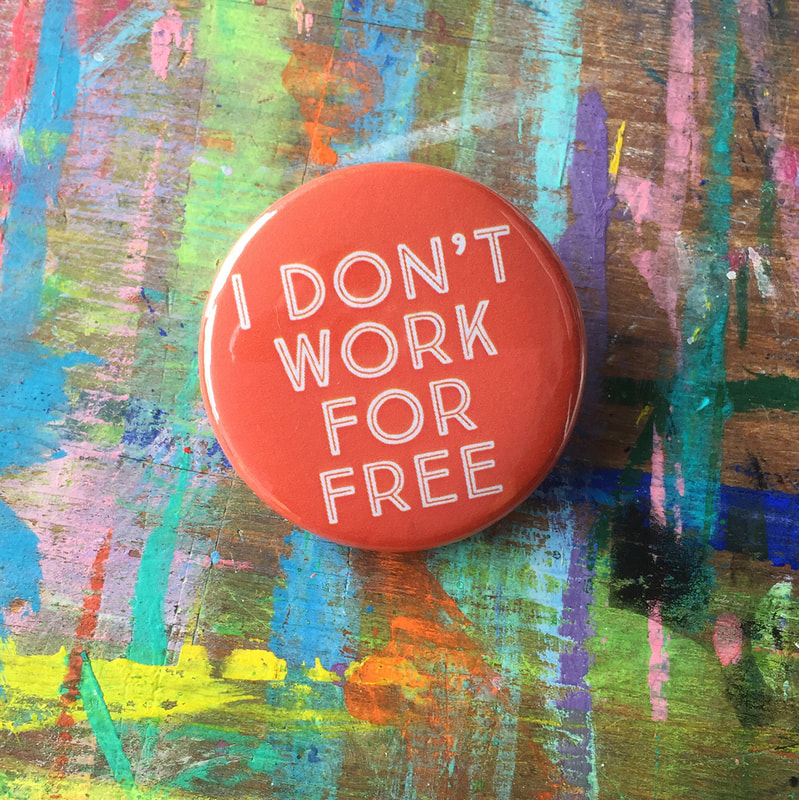
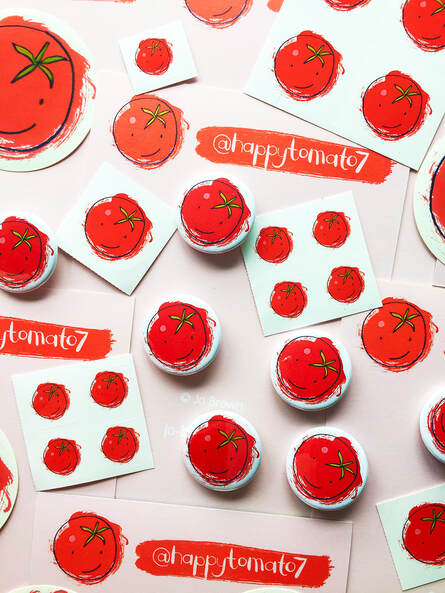
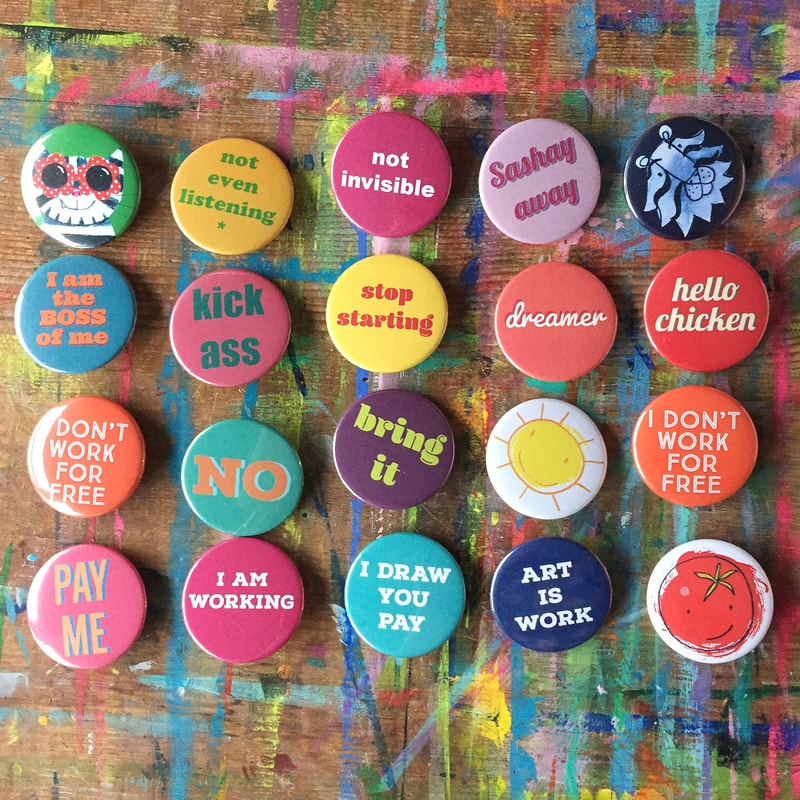
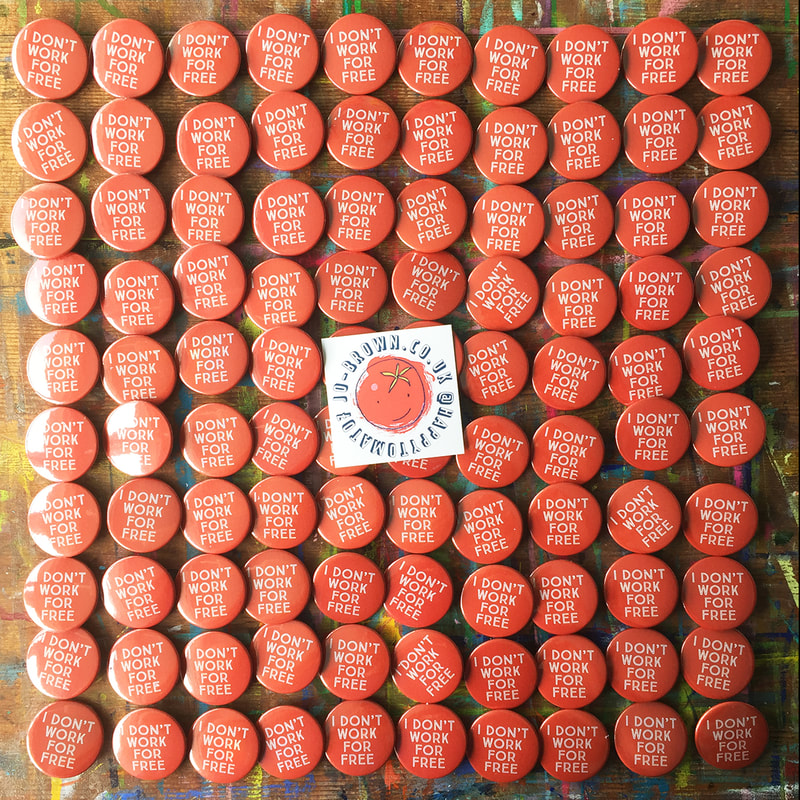
Three Badges by Jo Brown, Illustrator, who DOESN'T Work for FREE. I created these pin badges initially for my own amusement, but they are proving very popular, particularly artists and makers of all kinds, and the self-employed. Somehow writing it on a badge reinforces the message, and if someone comments on it, it starts a conversation. Creatives are often asked to do something 'for free' by a relative, a friend or in business - though they don't frame it that way - more likely something like: 'It'll be great exposure! ' 'You will be seen by all our followers', 'it's a great opportunity', '-it's for a good cause... ' 'it'll only take you five minutes' (!) 'We have no budget...' 'but you do it because you love it...' Or, they can minimise the effort by beginning 'Just...' as if the thing asked for takes no effort at all. Why I Don't Work For Free (and neither should you) 1. Art is work. It takes time and skill, and effort. Years of training, development and practice. It could be a 'quick sketch' but years of drawing and choice making have got you to the point where you can do that sketch. 2. Just because you love something, it doesn't mean it doesn't have value. You wouldn't ask a plumber to work for free because they love plumbing, would you? (there is a third reason, see end of post) So with all these things in mind, I created my badge I Don't Work For Free. I had photos of it in my images that I used to apply to markets last year, and it led to a really fun collaboration. The Illustrators' Fair organisers commissioned me to provide badges for stallholders in Summer 2023. It was great seeing everyone wearing them, and sharing the message on social media. In December the range of self employed artist badges expanded to Art Is Work, I Am Working and my favourite I Draw, You Pay. I have other ranges of badges, not just for the self employed, but lots of them have messages. The messages are different depending on the viewer, I think, you can put your own spin on it.
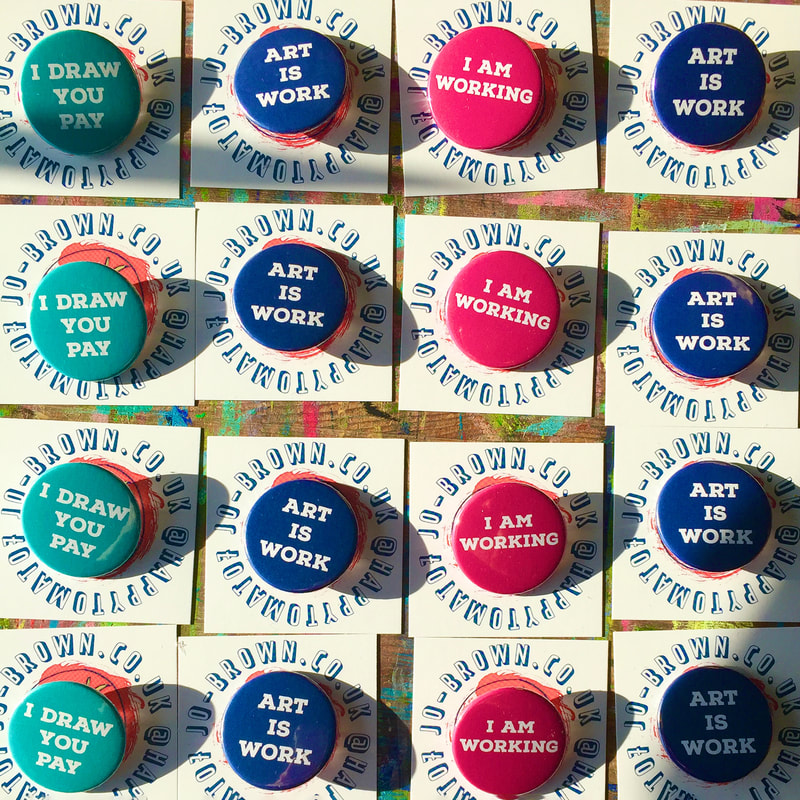
I am particularly fond of Not Even Listening. Buy my badges here. 3.If you needed it, yet another reason you shouldn't work for free. Nobody values something they didn't have to pay for. If you work for free, the person will not value your work. They won't want to pay for it next time either. I don't just get cross about this, read about my other word prints too. |
AuthorJo Brown, Illustrator. Archives
February 2026
Categories
All
Want to see which books I recommend?
My affiliate bookshop on bookshop.org is here |